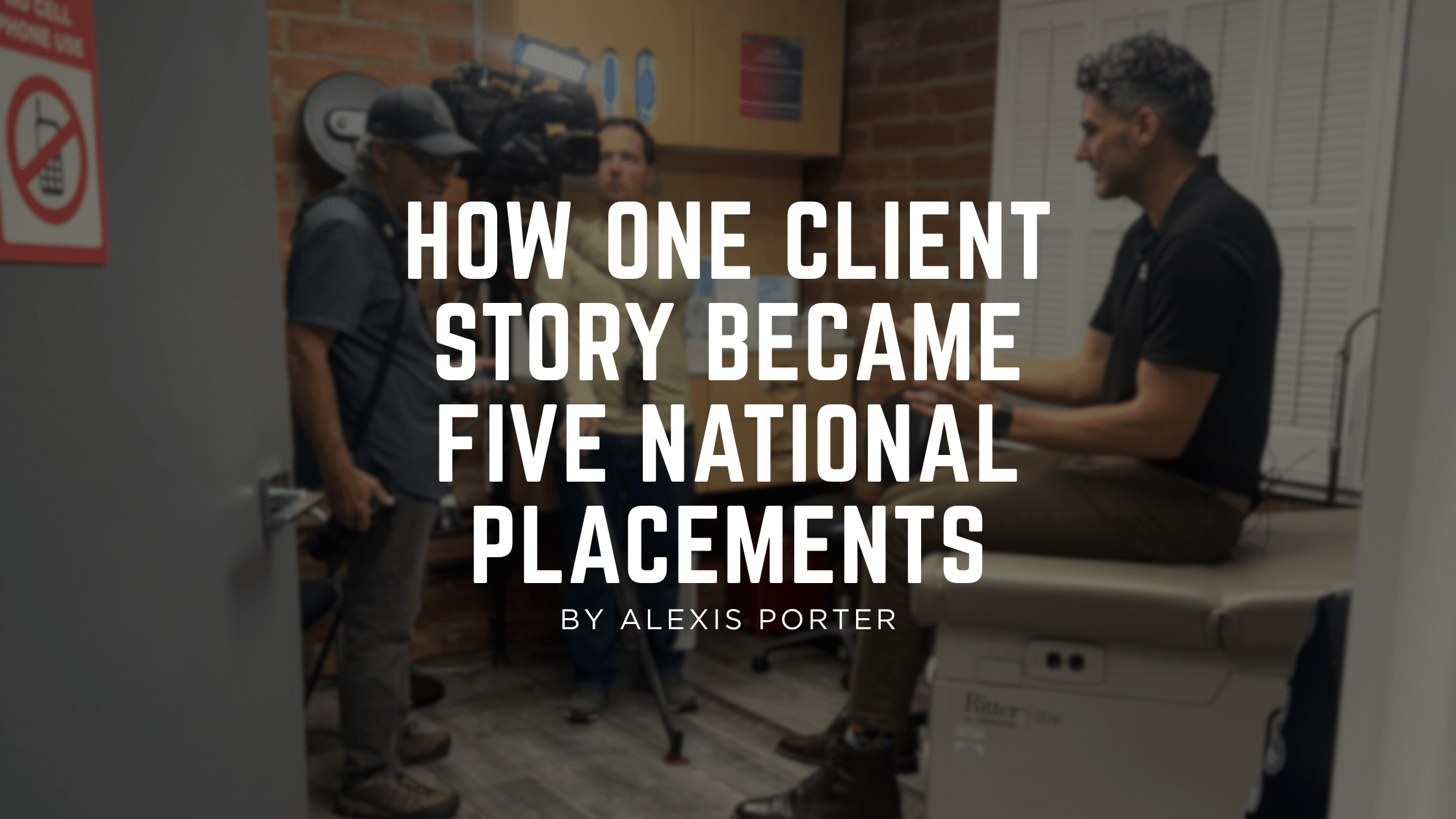
Most PR teams treat a media hit like a finish line. Pitch the story, secure the coverage, move on to the next pitch. Earlier this year, a client’s story showed us how some stories are so important, they deserve to be told over and over.
Spectrum Medical Care Center, a nonprofit LGBTQ+ health provider in Phoenix, became one of the first clinics in the Valley to offer Yeztugo, the first twice-yearly injectable for HIV prevention. That’s a solid local news story on its own, but what made it even more exciting was that CEO Mark Moeremans was willing to share his own experience getting the shot, on camera and on the record.
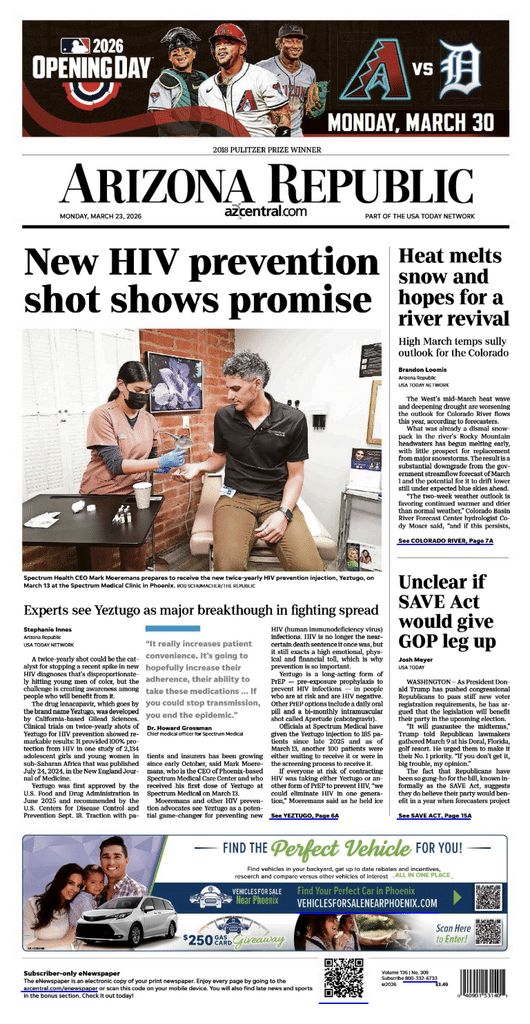
That gave us a major personal hook to the story and we secured two pieces of coverage with Fox 10 Phoenix and the front page of The Arizona Republic.
We were thrilled; the client was thrilled. That could have been the end of it. Instead, it was the beginning.
Finding the second story inside the first
As Spectrum Medical’s clinical team kept reporting steady, climbing patient uptake, something stood out. National coverage of Yeztugo was mostly about the drug not reaching people: insurance gaps, high list prices, slow rollout. Spectrum Medical’s numbers told a different story.
That gap between the national narrative and what was actually happening on the ground became another story and then another. Over the next few months, new legitimate, timely reasons kept surfacing to bring Spectrum Medical back to reporters, each one distinct from the last.
Five outlets, one open door each
The same day Mark sat down with Fox 10 for a segment about receiving his injection, The Arizona Republic’s Stephanie Innes was working on her own version of the story, one built around data rather than a single moment on camera. She paired Mark’s experience with Spectrum’s uptake numbers and brought in Dr. Howard Grossman, the clinic’s chief medical officer, to speak to what was happening clinically. That piece ran on the paper’s front page, and AZCentral carried the same story online.
The next piece of coverage came from an inbound request, not a pitch. A reporter at Reuters was working on a national story about insurance and access barriers but wanted to hear from doctors about what was actually happening in communities. Dr. Grossman was able to give her insight into Spectrum Medical’s own numbers and provided a counterpoint to her story. That story ended up syndicated to more than 90 additional outlets, including AOL and Yahoo, which meant a local clinic’s uptake data was suddenly part of a national conversation about drug access.
Then in June, Yeztugo marked its one-year anniversary since FDA approval. That milestone gave us another opportunity to talk about Spectrum Medical’s experience on the ground. Gayety picked up our pitch, framing Spectrum Medical as a case study in what strong uptake actually looks like, in a state where HIV diagnoses were still climbing rather than leveling off.
A story that outlived its news cycle
Five placements came out of that one original story: broadcast, front-page print, digital, national wire, and LGBTQ+ media, all within a six-month period. Combined, they reached more than 260 million unique visitors and viewers.
None of it required paid media or added budget. It required treating a single client story as something to keep building on rather than a box to check.
The takeaway
A story that ran once and then went quiet isn’t always finished. It’s waiting for the next real reason to matter again. The work is in noticing when the data, trend, or timing has shifted enough to justify going back to a reporter and knowing which reporter and which angle that is.