
Mignon Gould, Phoenix Business Journal, on Small Business Stories That Make a Difference
Mignon Gould, associate editor at the Phoenix Business Journal, where she oversees special editions and executive profiles and covers small business. Beat: entrepreneurs, Made in Arizona, features and profiles.
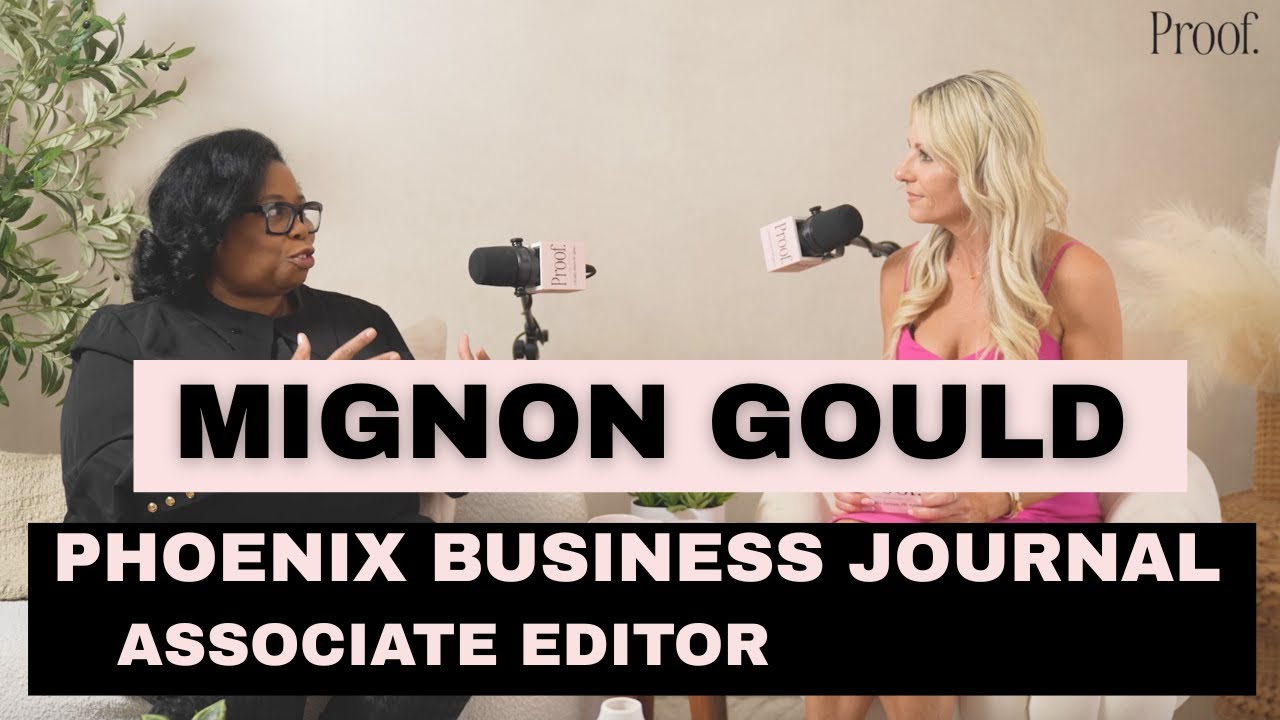
Who is Mignon Gould?
Mignon Gould is associate editor at the Phoenix Business Journal, where she oversees special edition and executive profile content and covers small business stories, features and projects. She joined the paper in 2023 after two decades in media that included writing for The Arizona Republic’s style section, content strategy at Hearst Media Services, founding TheChicSpy.com, a style publication that interviewed Emma Stone and Kevin Hart and reached 100,000 monthly visitors, and creating For Film Fest at Phoenix Art Museum. Mignon Gould holds a bachelor’s in communications from Arizona State University and an MFA in fashion journalism from the Academy of Art University. Her third great uncle founded the California Eagle, one of the first African American newspapers in the West.
In this Off Deadline conversation with Proof Publicity founder Melissa DiGianfilippo, Mignon Gould explains how a childhood spent making her own magazines from clippings, and a Hollywood Digs blog that got her noticed by the Republic, turned into a career. She talks about leaving a comfortable fashion and entertainment lane for business journalism, and why the two are more alike than they look: both are about finding the unique, powerful story. Her favorite recent interview was a retired couple who put their entire retirement savings into Cove Mesa Vineyard, which she says is proof that experience is the best time to try something bold.
Mignon Gould is direct about how she works. She does not take criticism personally, she leans on her editors when a call is close, and she believes small business and entrepreneur stories, like the Business Journal’s Made in Arizona series, make a bigger difference than their traffic numbers suggest. Her superpower is running an interview like a friendly conversation, and her advice to new journalists is to be themselves, give themselves grace and lean into their editors.
What Mignon Gould said on Off Deadline
“I love interviewing business owners.”
“Sometimes you’ve learned so much. That’s the best time to go do something exciting, because you have a lot of knowledge base to take with you.”
“The ones about small business owners and entrepreneurs are the ones that make the difference.”
“I come from an entrepreneur background. I have that empathy and understanding of what they’re trying to get across and how important this could be for them.”
“I really like to have a rapport with the person I’m interviewing, because I feel like you’re going to get the best interview for them.”
“Lean into your editors. They will be the best guides on your path as a young journalist to help cultivate your skill as a writer.”
How do you pitch the Phoenix Business Journal’s small business coverage? Proof’s take
Three things worth taking from this. First, Mignon Gould says the stories about small business owners and entrepreneurs are the ones that make the difference, and the Made in Arizona series exists to tell them. A founder who builds here, hires here and sources here has a home in her coverage, even without a big funding number. Second, she wants a conversation, not a press release. Her best interviews come from rapport, so a founder who is prepared to talk openly about the decision, the risk and the people involved will get a richer story than one who sticks to talking points. Third, she said it herself: PR people help owners shape the narrative before it reaches an editor, so by the time it gets to her there is a story to work from. That is the job. Proof Publicity does that prep work with Arizona restaurants, hospitality groups, healthcare practices and professional services firms before they ever sit down with the Business Journal.
Watch the full episode
Proof Publicity earns business press and profile coverage for Arizona founders, restaurants and professional services firms. See our B2B PR work.
Episode transcript
Read the full transcript
[0:00] Welcome to Off Deadline. I'm Melissa DiGianfilippo, and I'm so excited about my guest today, Mignon Gould with the Phoenix Business Journal. Welcome, Mignon.
[0:00] Thank you. Melissa. Thank you for having me. I'm so excited to talk with you today.
[0:00] Me too. Mignon Gould is the associate editor at the Phoenix Business Journal, where she oversees special editions and covers small business stories with 20 years of experience in the field. Mignon has done a lot before, joining in 2023. She founded and ran several media ventures, including Mignon Media, a communication strategy group. The Chic spy.com, a style publication that interviewed celebrities like Emma Stone and Kevin Hart and reached 100,000 monthly visitors. And for Film Fest, which celebrates fashion and film through festivals at Phoenix Art Museum. She previously wrote for Arizona Republic's Yes Style and worked as a content strategist for Hearst Media Services. She holds a bachelor's in communications from ASU and an MFA in fashion journalism from the Academy of Art University. Fun fact her third great uncle founded the California Eagle, one of the first African-American newspapers in the West, which ran for 85 years starting in 1879. That is so cool.
[1:16] Yeah, when I remember when I was young, my family used to always talk about it. And, you know, when you hear family stories, you're like, oh, okay. He was 17. He decided to migrate to California because we were the family was from Texas. And then my mom and I started doing some Ancestry.com research, and we were able to uncover even more depth information about the publication, about the people he worked with, about the editors he hired, and kind of how the publication evolved. It was originally named The Owl, and then he changed it to The Eagle. And so it was pretty exciting to actually see that come to fruition. And then to know that I've always been interested in writing in some capacity and communications and that type of thing, and to know that that was in the family was super exciting.
[2:20] Oh yeah. And my first question really was like your backstory, I always want to know why journalism and how. And it's so interesting to know that it's been in your blood, you know?
[2:20] Well, it's so funny because I actually took a detour to journalism because when I was in high school, I thought for sure I was going to go into architecture. I even went to summer camp, went to Tallahassee and West. I just knew this what I was going to do. Went to a summer camp at ASU, went to college and then, couple of years and got into engineering and was like, ooh, this might not be for, like so much different.
[2:37] Yes. Like much different career path.
[2:37] Exactly, exactly. So love the math. But when I got to engineering, I was like, well, let me rethink this. And I always have been really good at communication and, writing and telling a story. So I said, you know what? I think I'll go into business and I'll do marketing. So I ended up finally, when I decided on a major, ended up majoring in communications because I figured no matter what, I'd be able to get a job, every every company, every business needs good communication. And I thought, you know, that's a great place to start. So that's kind of how I ended up in the path where I'd be able to write about things. But then, I actually had my own publication called Hollywood Digs, where, people could reach out to me and ask where things were in a film or television, and I'd go find it for them. And so, The Arizona Republic actually reached out to me and wanted to cover me for their TV suites. And so I was like, oh, this is cool. Went in, did the interview was in there? Yes. Style magazine. And then they asked me what I like to come back and interview for a job for yourself. Well, not so amazing. I didn't get the job, but but Arizona Republic, another person there who was in there interviewing me, said, hey, I'd like for you to work for my department. So I went to work in their department and shortly after that I'd say maybe a couple of months. The publication decided Arizona Republic. We're going to shake things up and everybody's job is up, and you can reapply for any job. And I went yesterday. Yeah, yeah.
[4:17] So that was a great section. Is it still there?
[4:17] No it isn't. I think they stopped it in maybe 2011, 2012 a while ago.
[4:17] Yeah, I love that publication.
[4:17] Worked there for two years and, then decided to go to graduate school.
[4:38] Amazing. I like all the different steps and like all this. I know a little more than they know. Yeah, about your background, but, like, it's really cool that you've taken so many detours and, like, you're doing a lot of things still and still have your passions, you know?
[4:38] Yeah. Because I think it's really important to be true to yourself. I think you offer a job a lot more when you know what you're best. That and when you activate that. When I was working, at the Arizona Republic, I enjoyed working there, but I felt when it came to writing about fashion, I felt I didn't know as much as I could know. I felt like I need to know why a certain fabric is used for sportswear versus, you know, a dress. I need to know these kind of things. So I said, you know what? I'm going to go to graduate school. And everybody was like, are you crazy in a publication? And you're going to go to grad? What are you thinking? I said, you know what I want to learn? Yeah, I'm a lifelong learner. I always say that. And any opportunity to learn, I'm going to take it. And so I decided to go to San Francisco and study fashion journalism.
[5:28] That's awesome. And that is a common thread I'm finding in every journalist I speak to. Is this thirst for learning?
[5:28] Yeah, I think that must be a requirement. It really is, because you have to really have an open mind and learning people who really want to be an active learner. You have an open mind because you're open to what you learn may not be what you perceived in the beginning. Right. And so I had a perception before going into journalism that it was ABC. And and it's not necessarily that, it's a lot of what you bring into it. It's a lot of hard in journalism. And I think sometimes people think it's all about facts and figures, but there's a lot of heart in it. And even in business journalism, it's making that connection. So you could tell that story that's meaningful and like, yeah, make it resonate with the readers.
[6:14] And yeah, I totally agree. Exactly. Well, thank you for sharing that. So now we're diving deep okay. Okay. Which story pushed you furthest outside your comfort zone. And how did that experience transform you?
[6:35] Well, to be honest, I like to say all my stories just pushed me out of my comfort zone because typically it's something new and I like to be pushed out of my comfort zone because, like I said, I'm a lifelong learning and I feel like I learn something new when I'm pushed out of my comfort zone. I have to admit, when I first came to the Business Journal, just writing about business and journal was kind of stepping out of my comfort zone because I wrote about fashion and entertainment. For most of my life, I feel like I had a mental picture of what writing about business would be, and I was half right, half wrong. And I feel I've learned so much on this journey, and I feel like it's made me a stronger writer and a stronger editor.
[7:18] Yeah. That's great. It is a totally different beat. I mean, like, what you're covering, I mean, and how you're covering it and who you're talking to. I mean, totally different than fashion. So what a departure.
[7:18] Yes. And there are a lot of things that are similar. You know, you've got, you know, the facts, whether it's a big business or small business. Everybody has that story that makes them unique, that makes them powerful, that makes them vulnerable. And it's finding those tidbits that makes the story kind of juicy and kind of good. And so I feel like you can the same principles that are with fashion and entertainment journalism is pretty much across the board similar. It's just finding that passion point for you and being able to deliver that story.
[7:58] Yeah, well, that's a great point. So in my experience, every journalist faces some kind of moment of doubt. Can you share a time when you reached a professional crossroads and how did you navigate it?
[7:58] Oh, it's interesting you say that this actually harks back to when I said when I was at the Arizona Republic and I decided to go to graduate school. I never like to feel like I've hit a stalemate. And I was like, okay, I'm just writing very commercially and I really want to know some intricate details about fashion as an industry. And I wasn't really writing about that and that really wasn't what we were doing. But that wasn't on the publication. That was on me to figure out. I need to learn more about it. Right. And so in order for me to do that, I need to either educate myself, do my own thing, or go back to school. So I chose going back to school, and it was actually the the best thing that could have happened to me at that point in my life, because that's when I decided to turn my publication into a business. I also use it as my thesis, which is what made me turn into a business. And that's how I started really diving into celebrity and costume designer interviews. So it was it was a good thing for me to do.
[9:05] Wow, I love that and I love that it like you push yourself out of your comfort zone to get to that spot in the first place. Like, that's really cool.
[9:05] Well thank you. Yeah. Thank you.
[9:05] What reporting experience brought you the most pure joy or satisfaction in your career so far?
[9:22] Oh, I, I would have to say this is going to sound so cliche, but I love interviewing business owners. And recently I had a story about an elderly couple who went into retirement and decided to start their own vineyard and winery. And it just blew me away because they reinvigorated themselves and they they now are on a new chapter.
[9:46] Right. And a lot of times when we think about retirement, we think about, you know, going on the road, traveling, you know, going on a cruise, staying at home in your rocker and watching, you know, jeopardy, which is what my grandmother like. Okay. There's nothing wrong with that. Okay. Exactly. Nothing wrong with that. I still watch jeopardy, but, it was exciting to see them starting a new career in their 70s.
[10:08] Yeah, and that was amazing to me. And I was so excited to tell the story because I feel like sometimes people, as I get older, are forgotten, right? And sometimes you've learned so much. That's the best time to go do something exciting, because you have a lot of knowledge base to take with you.
[10:08] I love that, and I now I'm going to have like a secret new, maybe not secret like life goal of, you know, a vineyard or a winery in retirement. But I do think like you're so right. It's cool to think about maybe that point in your life a little less risky. Like, hopefully you've made smart decisions, so you're set up for success and whatever that means for you, and then you get to do something a little be crazy, a little, a little bit riskier, you know?
[10:33] Well, that's what was most exciting to me about this story, because this couple, not only did they decide to start a new chapter in their life professionally, they took all their retirement savings to do it.
[11:00] Oh, wow. So that's a huge risk.
[11:00] Yeah. So they didn't have any, special funding or anything like that. So that was the most exciting. And they were just over the moon about it. I mean, they were talking about, okay, they may not have have already scaled to where they want to be, but they saw the possibilities and were excited about that. So it just lets you know that any stage in your life, there's always that hope in that promise. And just to keep chugging along to make it happen.
[11:16] Yeah. And that must be inspiring for you. Like, oh, you're telling their story. But I'm sure knowing you have like an entrepreneurial spirit, doesn't it? Just like, stirs something and you're like, I can do that. I could do like,
[11:16] oh, it just made me I think my most proud, proudest moment was being able to share their story. That meant a lot for me because like I said, a lot of times I feel like as people age they become forgotten. Yeah. And there's so much amazing knowledge base that they have and so much that they still can do. And I thought this couple was doing amazing job of, of of showcasing that.
[11:34] Do you remember the name of their business? I'd love to know.
[11:34] Yes. It is called Mesa Vineyard Cove Mesa. So Cove Mesa, is a small little town, in Arizona. And that's where they have their vineyard,
[11:34] I love it. Great. Okay. What ethical dilemma have you faced that still doesn't have a clear answer in your mind?
[12:20] Okay. To be honest, at this point in my career, I have not really come to the cross words whenever I've really been challenged with an ethical dilemma. But whenever I do have any challenges in the newsroom or something I question, or if I receive an email and I'm not sure how to address it, I kind of go to my editors and kind of have a conversation about it and kind of work through it, but otherwise I have never really had one that I can say where sometimes in journalism, you know, you've probably heard of yellow journalism and people have to decide, is this going to be for salacious purpose or is this really good news? Because I've never really had a dilemma like that yet.
[12:52] That's great. That's I mean, probably a blessing. And I guess maybe taking the question in a different direction is when you write stories, you know, people have reactions and I'm sure they're mostly good because you write a lot of features and you've written about fashion. But if and when, I'm sure you get negative comments, everyone does. Like how do you deal with that criticism or that commentary? You can see things live on social media or see comments on stories. You know, in some cases. Does that sit with you? Does it affect you? How do you deal with that?
[13:13] Actually, I don't take those things personal. And the reason being is it's just like any other job, you come into a job, you you do the research you need to do. You put your best foot forward, you put your best work forward. And that's all you can do at the end of the day. And knowing that you came in there with credibility and good intentions. And if it's something that I feel like I need to address, I talked to my editors and we address it and we move on from there. But pretty much that's how we handle it.
[13:51] That's right. And that's great. And it helps to have a supportive newsroom. Right. Like,
[13:51] oh it does, it does. I have two of the most amazing editors ever ever, ever. I don't even know how to, how to quantify it, but they are such a good support system and I've learned so much from them. So I think that's really important, as well, to have a good team and the reporters I work with, the other editors I work with, it's a good rapport, and I think that helps.
[13:51] Yeah. Oh big time. Which of your stories do you believe made a genuine difference despite maybe getting like a ton of attention?
[14:35] You know what I always feel like the ones about small business owners and entrepreneurs are the ones that make the difference. We started a series called Made in Arizona, and I'm so passionate about it because it's businesses that are being developed here and really using the resources here. And, I think it's really important when you see those stories. They may not get tons of great numbers, but you know what? They're making an impact with that small business owner. And that could impact their business, which in turn could impact the economy. And eventually and directly, it comes back to all the work that we do.
[14:56] Oh, yeah. Absolutely. And I love that answer. As a PR person, because my clients are primarily, you know, small business. And I couldn't agree more. I think, first of all, like the world needs to know about these stories. It's not always just big national chains or private equity. It's it's small businesses. And those big chains were small at once. They were small when somebody took a chance and wrote about them to hear their story, let them share their story. And your story, like one story for a small business owner, can change the trajectory of their business truly, completely agree. It all depends on how much they share it, of course, and how much they share in the story. But like a good story can go so far. So I know my clients are always grateful and I'm I get it like the value is so impactful. So I love to hear that you also recognize like how much of an impact that makes.
[15:54] Oh, definite. Definitely. And I think it's also because I come from an entrepreneur background. I have that empathy and understanding of what they're trying to get across and how important this could be for them. Whether it's perceived or reality that also can invigorate them to keep going because they feel like, okay, if somebody is interviewing me, they see something in this. Right? And so that gives them the momentum to keep going.
[16:14] Absolutely. What childhood dream or obsession still influences you today in unexpected ways?
[16:14] Oh my gosh, I'm glad you asked this. Okay, so when I was a kid, my mom used to have stacks and stacks of magazines and I'd just, you know, flip through them. And it just I was just so excited about it. And I used to would take out clippings and write my own stories, collage my own stories, do all these montages, and I make my own little magazines. And so at the time, I wasn't thinking, oh, I'm going to write for magazine or write for a newspaper. I just really enjoyed that. Yeah. And so now, fast forward far into the future. I see some of that coming to play. I'm getting opportunities to, share ideas with our design team and, and do some of those things. And I feel like that is that, that that young person in me who had this kind of concept and, and playing around and, you know, making their own magazines. And now as an adult, I'm getting to share some of my input in those things, and it's pretty exciting.
[17:20] Oh that's cool. I like and I can relate because I, when I was little would just write books like I wanted my mom to buy those, like hardcover books, you know, like, yeah, you could just color in and write in. And I wanted to create stories, and I still feel like I'm a storyteller, although not a journalist as a PR person. So I love that, like you are laying magazines out and creating your own, you know, magazine when you wrote. Yeah, yes.
[17:20] But as a PR person, you're helping people shape their story. Right. So you're you're helping them start shaping them. By the time they get to us, they kind of have a nice narrative for us to work off. I will take that compliment or whatever all day. I love it.
[17:51] Okay, so now this is the fun part. Okay, we're getting into rapid fire. So you just have to say the first thing that comes to mind, okay? I tell the story behind. That's fine too. But like first, okay, your secret journalistic superpower,
[17:51] being able to conduct an interview that's like a friendly conversation and make the interviewee feel comfortable, let me tell you how important that is.
[18:19] Like it is. So there are a lot of journalists who don't care about making a source comfortable.
[18:19] I you know them. I know exactly what you mean. I think every journalist goes in and they're hoping they'll be comfortable. They just want to get in there and give those questions. But I really like to have a rapport with the person I'm interviewing, because I feel like you're going to get the best interview for them. If they're comfortable, for sure. They're going to open up so much more. And they tend to. Yes.
[18:39] Story you cover. If your editor said unlimited budget go wild, okay.
[18:39] It's going to have to do with fashion, of course. And I would really love to design a garment from start to finish and manufacture it, and to show people that manufacturing fashion can be done in the valley. I really believe that that can happen. And if there was an open budget I already know, I, I might even say I might have to, design a blazer. For all sizes and manufacture it and, and put it out there.
[19:02] I love that and like show and detail the process.
[19:02] Exactly. So you can see what it goes in. And to be honest, at the end of the journey, I may be able to answer those questions why it's feasible to make things in Arizona and why it's not
[19:24] love it. Best headline you ever wrote or wish you wrote.
[19:24] Actually, it's going to be two headlines. I was writing stories about the Arizona Film Tax incentives. You might be familiar with that. And the first story I wrote, the headline that I gave it was hooray for Valley Wood.
[19:45] Oh, I love that.
[19:45] Oh thank you. And so a follow up article I did included the film incentives, and they were embroiled in a lawsuit with Goldwater Institute. And so that one title I gave it Valley Wood or Bust, And so that was your have those are my headlines. So I was super excited. I was excited that my editors had enough confidence in me that to let those ride and so
[20:07] oh that's great. Good job. You creative.
[20:07] If I weren't a journalist, I'd be, oh, an entrepreneur or a business owner, definitely.
[20:07] But you kind of are
[20:07] I am. That's so like, if I just gave this up tomorrow. Yeah, that's what I would do. Yeah.
[20:25] By the way, speaking of you do a really good job on your Instagram, sharing your press and everything. Like I don't see a lot of journalists doing that as well as you do.
[20:25] I actually maybe okay, this is going to sound weird because I see something. They're just geniuses with it. And it's usually, like larger publications, like people work for umbrellas under like, condiments, things like that. And I think it's because it's so, so it's so ingrained in them that that's a part of of doing it. I think, newspaper writers, business journalists are really focused on the stories and those type of things, but we're all working on getting better at the social media and literally I just started my social media back up and I'm going to get focused on it. But, I think that's an important, important aspect of what we do. And I feel like it's one of the best ways to connect with some of the people we might interview, especially small business.
[21:11] Oh for sure. Yeah, it's a great way. What's one piece of advice you'd give to someone just starting in journalism today?
[21:11] Oh, I would say be true themselves. And give themselves some grace because it can be intimidating. And especially when you're going to an environment where you have a lot of people who have more experience than you do, give yourself some grace. But also lean into your editors. They will be the best guides on your path as a young journalist to help cultivate your skill as a writer.
[21:51] Yeah. That's great. That's a great piece of advice. I am so appreciative that you have joined us today. Thank you so much, Mignon. It was such a pleasure.
[21:51] Well, thank you for having me. This has been an amazing experience. Thank you.