
Stephanie Innes, The Arizona Republic, on Covering Health Care and the Giffords Shooting
Stephanie Innes, health care reporter, The Arizona Republic and the USA Today Network. Beat: patient safety, hospital quality, health policy and public health.
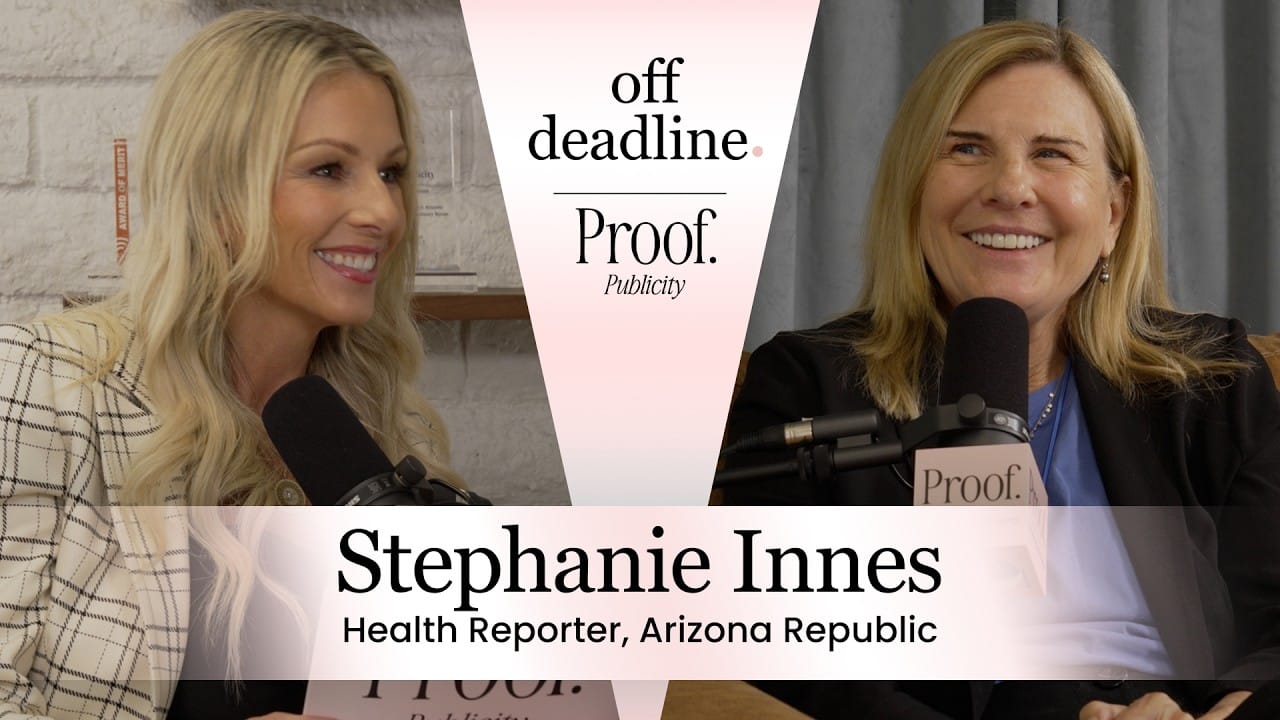
Who is Stephanie Innes?
Stephanie Innes has been a journalist for 33 years and is the health care reporter for The Arizona Republic, part of the USA Today Network, covering patient safety, hospital quality and health policy. Stephanie Innes led the paper’s coverage of the Covid 19 pandemic. Before Phoenix, Stephanie Innes covered health for the Arizona Daily Star in Tucson, where she was part of the team that covered the attempted assassination of Gabrielle Giffords and the gaps in the mental health system that failed the shooter. Stephanie Innes grew up in Toronto, studied English at Western University, wrote sports for the student paper after failing to make the tennis team, took a graduate degree in journalism at Northwestern, and drove herself to a first newspaper job in Flagstaff, Arizona, without ever having visited the state.
In this Off Deadline conversation with Proof Publicity founder Melissa DiGianfilippo, Stephanie Innes describes being the only health care reporter at The Arizona Republic, and notes that the Arizona Daily Star in the smaller Tucson market once employed three. Stephanie Innes talks about the 2011 Giffords shooting as the call that split her career, including having to pull her car over, and what happened when national crews arrived: sources telling the local reporter she could have Thursday, press conferences she was physically pushed aside at, and a national press corps that left for the next disaster while local reporters stayed to absorb the resentment.
Stephanie Innes brought a painting of the Tucson desert to the episode, made by a woman Stephanie Innes followed for about six months after the woman stopped to help push a stalled car, was hit, and lost both legs above the knee. The two have stayed in touch. Stephanie Innes also discusses correcting misinformation on measles, where commenters blame undocumented immigrants while the Arizona counties with the highest vaccination rates, Santa Cruz and Yuma, are both border counties, and her push for unlocked gift links so paywalled health coverage reaches Medicaid patients and marginalized readers who need it most.
What Stephanie Innes said on Off Deadline
“I think it was in 2011 when Gabby Giffords was shot, and I just couldn’t believe what I was hearing.”
“They’d say, well, I’m talking to NBC tonight and CNN tomorrow, and I can talk to you on Thursday. And you’re like, I’m the local reporter.”
“They did their Gabby Giffords story and then they flew off to the next disaster, and we’re kind of the ones being held accountable.”
“People will blame undocumented individuals. The counties with the highest level of vaccination are Santa Cruz and Yuma, and those are both border counties.”
“This isn’t about you. It’s about your readers and getting the story.”
“There’s marginalized communities that are not going to pay for that, and that’s who a lot of my stories are aimed at.”
How do you pitch Stephanie Innes at The Arizona Republic? Proof’s take
Three things worth taking from this. First, one reporter covers all of Arizona health care for The Arizona Republic, so a pitch that requires her to do the sourcing will lose to a pitch that arrives with the patient, the clinician and the data already lined up. Second, Stephanie Innes aims her reporting at readers on Medicaid and readers who cannot afford a subscription, so a story that reaches the people who need the information will always beat a story that reaches the client’s investors. Third, when Proof Publicity placed the yes-to-go HIV prevention shot story for Spectrum Medical Care Center, the value was community access, and Stephanie Innes confirmed on this episode that The Arizona Republic is rerunning that story outside the paywall.
Watch the full episode
Proof Publicity represents hospitals, clinics and health care innovators across Arizona. See our healthcare PR work.