
Yetta Gibson, Arizona’s Family, on Storytelling and the Back Story
Yetta Gibson, Emmy award winning weekday anchor at Arizona’s Family (3TV and CBS 5) and host of Arizona’s Family Original with Yetta Gibson, a long-form interview and features program.
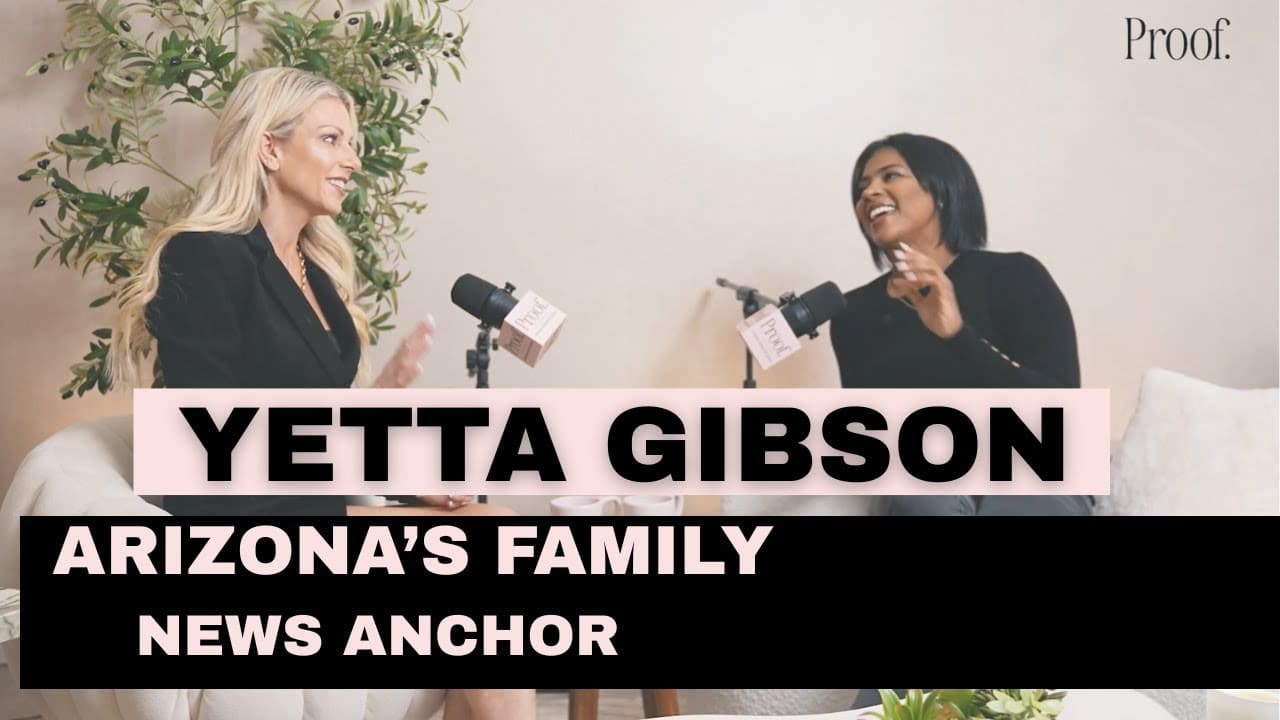
Who is Yetta Gibson?
Yetta Gibson is an Emmy award winning journalist with 25 years of news and entertainment reporting across NBC, CBS, Fox and ABC affiliates. An Atlanta native, Yetta Gibson decided to become a journalist in sixth grade after meeting WSB anchor Monica Kaufman on Career Day, started as a college intern and radio news reporter inside the CNN Center, gained national exposure on the Tom Joyner Morning Show and reported on the Las Vegas Strip before moving to Phoenix. Today she anchors weekday newscasts at Arizona’s Family and hosts Arizona’s Family Original with Yetta Gibson.
In this Off Deadline conversation with Proof Publicity founder Melissa DiGianfilippo, Yetta Gibson calls herself a human to human connector and explains what that means in practice: reading a guest’s energy before the cameras roll, winning over a well known subject who announced he did not do small talk, and running a quiet practice pass so nervous interviewees relax before they realize the real conversation has started. She talks about why she built her show around the back story rather than the headline, and about the week as a general assignment reporter when she covered a baby drowning every day and started dreaming about it.
Yetta Gibson also tells the story behind her first Emmy, a feature on former drug kingpin turned chef Jeff Henderson that she fought for after being told no, and credits Arizona’s Family anchor John Hook for taking her notepad away and forcing her to tell stories instead of reciting facts. She is open about decompressing in the car, taking mental health days and the monsoon live shot early in her Arizona career that taught her to stay nimble. She is a Valley resident and mother of two daughters.
What Yetta Gibson said on Off Deadline
“I’m, I’m a human to human connector.”
“It has everything to do with people’s mindsets and opening up to different viewpoints and different opinions.”
“But behind the story, the back story is what I think a lot of people want to know about.”
“So to get people to forget this is here or forget that they’re in a setting where cameras are on them and they can really share.”
“But we have to take care of ourselves, too. And there are different ways we can do that.”
“You find out what’s going on and then you tell us”
How do you pitch Arizona’s Family Original with Yetta Gibson? Proof’s take
Three things worth taking from this. First, Yetta Gibson built her show around the back story. She assumes viewers already know the headline and wants how it really felt, where you were when the call came, what it took. A pitch to Arizona’s Family Original should lead with the person and the moment behind the news, not the announcement itself. Second, she reads energy before an interview and works to make guests comfortable, which means a client who is nervous on camera is not a dealbreaker, but a client who refuses to be human is. Prepare spokespeople to talk like people. Third, she fights for stories she believes in, including going back after a no, so a strong human story with real stakes can earn more than a single segment if you give her the material to make the case internally. Proof Publicity prepares healthcare, hospitality and professional services clients for exactly this kind of long-form local television interview.
Watch the full episode
Proof Publicity earns feature coverage for Arizona healthcare providers and health-focused businesses. See our healthcare PR work.
Episode transcript
Read the full transcript
[0:00] To be. Welcome to Off Deadline. I'm Melissa DiGianfilippo. My guest today is an Emmy award winning journalist, Yetta Gibson. With 25 years of news and entertainment reporting experience spanning all major networks NBC, CBS, Fox and ABC. An Atlanta native, she began her career in the 90s as a college intern and radio news reporter at one of Atlanta's premiere stations inside the CNN center, where she gained national exposure on the Tom Joyner Morning Show. Her coast to coast career has developed her versatility as a high energy personality and anchor on Arizona's family, currently hosting Arizona's Family Original. She's passionate about storytelling and making what she calls that comfortable connection with viewers. She's a proud Valley resident and mother of two daughters. Thank you. Thank you so much for being here.
[0:50] Thank you so much for having me.
[1:10] Isn't it fun sharing stories?
[1:10] It is my favorite thing to do. I love learning from other people's stories. And so I think, I hope everyone else. That's why we do this, right?
[1:10] Well, I hope so here, because I've got lots of stories to tell. I've been I've been doing a lot for a long time. Actually, I've been doing PR for 20 years, and one of my first, memories on a TV broadcast shoot was with you.
[1:25] No way was it?
[1:25] You had a client called Paramount Promotions, and they did those giant Tostitos inflatables for the Fiesta.
[1:25] Yes. Which is like a long time ago. Did they do the pictures that. Do you know? That's still in my garage. Oh my gosh. You know what I mean? The big print out. Yeah, yeah. I have to send you a picture. Oh, my God, I hope she's still in my garage. Because everywhere I moved since then. Yeah, I kept that. So it was like this old life sized cutout of me. It's in my garage, so I'm like, sometimes when the workers come over the lawn, people, they open the garage, they're like, oh my gosh. So that's that's a lot. I still have that. So yeah, well, I remember that.
[2:03] It's such a it's so cool to be interviewing someone who, like, I got to work with very early in my career. So I just really hopefully it was a good
[2:03] oh my gosh. Oh, I've never I mean, I've always had a great exciting video.
[2:17] Oh truly. Thank you. And you've been great to me. I know your stuff girl. Oh we're going to jump right in. Okay. We're going deep today. So yeah, I want to know first why did you choose journalism and how did you even get your start?
[2:17] Yes, I chose journalism. I was in sixth grade. At that particular time. I wanted to be a dentist. We had Career day, at our school, and the local main TV woman came to our classroom and did basically what we're doing here, explaining how the career goes. And I don't know what it was in her speech and her talking to this, the sixth grade class. But I changed what I wanted to be right then and there. And, her name is Monica Kaufman.
[2:59] Oh, I love that you remember.
[2:59] Her name is Monica Kaufman. She worked for one of the big stations out there, WSB channel two. And from that point forward, I knew I wanted to do what she did, mainly because she was talking about how you learn while you're doing your job. You're never you never, ever stop the learning process. Because every single day when you talk to people, you learn something new. And I go, oh, I want to do that. So that's how that happened.
[3:20] I love that. And I love that, like thirst for learning. I, I don't think everyone has that naturally. And it's like, you never stop. You don't get out of elementary, middle, high college and get into adult life.
[3:20] You never stop learning every single day. There is something that I find out.
[3:20] Yeah, through talking to people. That's great. I want to know which subject or interview has stayed with you the most powerfully throughout your career, and why?
[3:40] Stay with me. In what way?
[3:40] Yeah. Like just, you know, what is impacted you? What keeps you up at night in a good or maybe a bad way, you know, like, is there is there a subject or a source that or a moment, where you just you'll never forget it.
[4:11] Oh, that's a hard one. I can tell you I think about pretty much every day, especially in this climate, you know, when everything will settle back down. And in it, it has nothing to do with politics, per se. It has everything to do with people's mindsets and opening up to different viewpoints and different opinions. And when can we be friendlier about that? Because right now it does. There does not seem to be an end in sight when it comes to that. Everything's a battle. So it's hard to pinpoint one thing because I think everything is under scrutiny, you know? You know, it's hard to say anything. It's hard to have an opinion. It's hard to react. So I think about on a constant basis is when are we going to see that tide change? When is the moment going to happen? When, okay, things are going to start going this way and we can get along better? You know, disagreements are going to happen. Different opinions happen. That's life. But when are we going to be okay with that?
[4:56] Yeah I think about that a lot.
[4:56] And you said something that I just am curious about, like it's really hard, I imagine in your profession to have an opinion ever.
[5:17] Yeah. Usually I just don't do it. Yeah. I mean I have one I but you will never but you can't ever know it publicly. And for me it's not important because, you know, as I said, it doesn't matter what I think. Right. And and that's not my job. My job is to give you the facts. You can disagree with the facts that I give. And that's the part of it. You know, sometimes the news people, are under scrutiny just because they're talking about the news, you know, and no matter what, you know, we get kind of attacked because people feel like they can figure out what your side is based on the news you're reading. Sometimes it's just it's just arbitrary. Sometimes you read this, sometimes I read that it has nothing to do with me. So I, I don't find it hard to not share my opinion because it's not my job. My job is to give you what you need to know and do with that as you will. Yeah.
[6:01] So it's what's hard is people assuming they know what your opinion is and then they start judging and judging shaming. Right. That's the hard part.
[6:22] Yeah I can't, I can't even imagine I mean I do a little bit understand I think as a business owner it's hard to publicly have an opinion sometimes too. And I choose not to.
[6:22] Yeah. Do you feel like you want to have an opinion.
[6:22] I do why I do, but I don't want to I don't need to publicly share anything because I, I don't want to turn off 50% of people and no matter what it is.
[6:38] Right? Right. And then for your job and my job, I like it, you know. Yeah, you have an opinion about it, but it's in the spirit of business and what you're doing. I don't feel like I have to say what I feel like I part of a job, unless it's something crazy. I mean, we did a story yesterday about Pop Tart ice cream.
[6:57] Okay, tell me more. I had a lot. I missed that one.
[6:57] Like ice cream sandwiches with a pop tart to pop tart. Now, I'll talk about that, but I'm not going to talk about the big stuff. I'm not going to talk about anything that's going to get too riled up. You know, I'll give you the facts. And that's pretty much all I'm going to do.
[7:12] Yeah. I'm not okay with that. What has been your greatest test of journalistic resolve and what ultimately kept you in the profession despite that, why are you still doing this?
[7:12] Who? You know, I am. I consider myself a journalist on one hand, where I can tell you all the things that are going on in the world, in your community. I can do that every day because I like to do that, and I like to know what's going on as well. So as I'm telling you, I'm learning to write. But on the other side of that, I'm, I'm a human to human connector. Right? That's that's what I consider myself. I mean, that sounds kind of like. Whoa.
[7:55] What do you mean?
[7:55] It's just, you know, I feel like I can connect with anyone. So I think some of the challenges have been people who. Who come in with whatever their energies are, right? And no matter what the energy is, no matter what the attitude is, no matter what the feelings are, before we start an interview, I mean, some people can come in and they can be very closed off. I had a person I interviewed. A lot of people know this person is. And I was sitting there while everything was being set up and I was just doing the small talk. You know, you do the small, the course, and this person goes, I don't do small talk. That rapport building report for an interview. Right. And this is before the interview starts, before the cameras are rolling and I go, you know, I just trying to see where your head and where your head is and just trying to know, like, what would you do today? What time did you fly in? I don't do I don't do small talk. When the cameras roll then we'll talk. So by the end of that interview that was 35, 40 minutes later, he said, I'm so happy I did this. I'm sorry. I was grumpy and, you know, and so I guess to answer your question is it's not necessarily a challenge. It's just that I feel like I can always connect with people, no matter what's happening, no matter what the situation is, I can always get them to come here and we can talk at a, at a very level, an equal playing field and get the information out to people and maybe learn a little something no matter what. So it feels like a challenge when it presents itself, when people aren't really open or blocked off or walled off or riled up about one side or another. But at the end of the day, by the time we're done talking, yeah, we get there.
[9:38] That's such a gift.
[9:38] Yeah, it is a gift. It is not something everybody can do. I mean, I remember in my early days when we would go to scene where something horrible had happened and, you know, that's a that's a tough situation to go into when somebody has just lost someone. And, you know, as a general assignment reporter, it's your job to go talk to those people. Now, I that was never my favorite thing to do.
[9:59] I can't even imagine. I mean, that's like that. Yeah. But how do you do.
[9:59] Yeah. It's never your favorite thing to do. And, you know, I'm out of that space now, but that's kind of how I got the know how to. And I and I also worked in Vegas. I worked on the Las Vegas Strip.
[10:18] Right. Oh, the things you must have.
[10:18] So no matter what my subject matter was, I was on the strip. And so the people on the strip, you know, they're in a different place than I am. I'm talking about something serious that day. So in any situation, I feel like you can always connect with somebody, you know. And I don't know, to answer your question, to go to somebody's house who's just lost a child or who has experienced something horrible like a break in at their house, you go talk to them. It's it's difficult. But I have always had a knack for bringing out what needs to be brought out for the story, for getting the information out no matter what the temperature is of the person in the situation. So I consider that something that I've figured out. I think it's a bit natural. I think you have to have a knack for doing that. And, you know, some things need to be handled with so much more care than just, I need this. So you put a mic in front of somebody's face. For me, it's more than that. It's about figuring out where that person is and meeting them there so that is something I'm proud of, that I've been doing for so long. And you know, no matter what, I like to hear from people, I like to hear their side. And I like to figure out how we can make what's going on in the background a little bit less. While we sometimes it's therapeutic for me.
[11:35] Oh of course, yeah. And I think, have you chosen any of those tough moments to like, depart from this career? You wouldn't be sharing that gift in like that. What you do is so I don't think people understand, like, you got to do the late stuff, I've seen you do it, but you also do the real, the real tough stuff. And the world needs to know and those sorts of to be shared and like so to keep in that profession that like maybe some days you wake up and you're like, I don't want to do this, right? Right. And sometimes you're having a bad day, right? And I do think that it is something that is needed in the world right now. Somebody who can go, oh my gosh, this is tough. I know, but talk to me about what this is. Talk to me about how people can be helped from your situation. What do you want people to know? What do you want to say so you can get it off? Like, I love doing that. And that's kind of my gift to this industry in my opinion.
[12:27] Yeah, absolutely. Oh, it is for sure.
[12:27] Your nephew. Yes. What reporting experience brought you the most pure joy or satisfaction in your career so far? Is there a moment?
[12:27] Oh, a moment. I'm a nerd when it comes to talking about talking to people and hearing their stories. That's why we developed the show that I have now. Yes, we hear all the headlines. You know, everything that's going on, whether you know the nitty gritty details or not, you pretty much have an idea of what's going on out there. But behind the story, the back story is what I think a lot of people want to know about. That's why we're here today. People want to know, you know, how the sausage is made, the behind the scenes, the behind the scenes stuff. How did you really feel? You know, I think about, these big moments like, let's just say that space launch, for example. Oh, gosh. Right. We know what's going on. We know that they're going to go up there. But behind the scenes, how do they really feel? Not just scared because we've heard that too. But when you got the phone call, where were you? What what did they say when you answered the phone call to do this? What did you think was the first thing you thought? So, I think that when I come out of these interviews and people feel like I feel so much better after I talk to you, or it felt good to get that out, or I feel like I'm helping people now, that is kind of constant for me that that can happen tomorrow. It happened ten years ago. I couldn't pinpoint it right off the top of my head, but I feel like, yeah, but I feel like that's a constant thing come off of an interview and they feel good. And you feel like you really did something that's going to propel someone or tell an important story, or that that must feel like it feels so good. I can't even really describe it. But, you know, for the people who receive it and for the people you're gleaning it from, too, you know, sometimes they're like, that was a really good interview. And it's not necessarily a compliment to me. It's because they feel like they put something out there that's good that they wouldn't have thought was shareable. You know, they wouldn't have thought was something that mattered. And when they talk to me and they go, oh my gosh, I'm so glad I got that out. And then on the other side, the the viewer or the listener or what have you is like, that was really good because I didn't know that. And maybe like helping disarm that person when they're uncomfortable because you do this every day so you can like turn it on, I'm sure, and be ready. And someone who's new and interviewing. But it's an important topic. I could be so nervous. And you have the ability to just be like, hey, cool, right? Without making them feel like less than or in experience. And that's a really important skill. And kudos to the people who do sit down with me and they go, oh my gosh, I'm so nervous. I have a little trick that I do, and I shouldn't even say it on here.
[15:09] You gotta tell us.
[15:09] Yeah, this is behind the scenes. You know, when I can feel that some of these nervous, even though I go, oh, no, it'll be a big deal. But at the end of the day, there's a microphone in somebody's face is fine for us.
[15:22] Yeah, that's not normal.
[15:22] No, this is not normal. Right. That's not normal at all. These cameras, lights. So I get that right. So one of the little tricks that I do is I'll go I have a little look. Right. My look to my camera on. I'll look at my camera like that. That guy knows to record this person, I'll say, let's just go through it.
[15:44] So smart. You're genius.
[15:44] Let's just go through it real quick before we start and I'll ask them all the questions. And now that was good. Okay. You ready? Okay. We're done. And they go, no, I go, no, we did it. It's great. You get it. So so disarming is such a good word. Thank you for that. Was because that's what I feel like is my thing.
[16:04] Yeah. You know, and when I say disarm, it's not a strategy. It's not anything. It's it's making people comfortable. It's a skill set that is critical. So you steal that if you want I love it. I'm going to I'm totally going to. Although I don't think my interview subjects will be quite nice.
[16:04] Doesn't matter. It doesn't matter. This all of this makes people nervous. Intimidating. Yeah, yeah. And it's not comfortable to talk. I mean this is not normal. Right. Yeah. So to get people to forget this is here or forget that they're in a setting where cameras are on them and they can really share. Yeah, that's a gift.
[16:24] This is not a planned question, but I have to ask, do you ever have you ever gotten nervous because. Like, how have you stepped out of that. You know, for me I, I've lived my whole life being like, if it makes me nervous, I have to do it. Except for skydiving. I'm never doing that. I made up, but like this. Yeah. I mean, I'm a PR person. I'm usually behind the scenes, but I love this kind of stuff.
[16:59] But is it, like, super comfortable? No. But that makes that's like, okay, I got to do it.
[16:59] So how have you stepped out of that for yourself?
[16:59] I don't think I don't like you step out of it. I think you move through it, you know? I mean, I'm trying to figure out all the different ways that I've been nervous because I definitely get nervous. Okay, let's let's just put that out there. Yeah, but I don't know. I don't, I don't know, I just think that whether it's you, the person on the other side of my interview or vice versa, because you're such a big deal and I'm like, oh my gosh, who's this? Yeah. At the end of the day, we're people and we're all the same. And I don't know, there's something that I do is not conscious. It's just something that goes there. A person they woke up this morning just like I did. They had to get coffee just like I did. And I do that again is there's no method to it, but it becomes real human when I sit in front of people, you know, let's just say Oprah walks in the door right now, Oh, I mean, I would die. Yes. Two dead people. Right. So she walks in and I'll do all of my gymnastics internally, but when she sits down, she's the same person as you. She's the same person as me. And it might take me a minute to adjust, right? But something happens, right? Something happens when it's time to talk. And and it's because of the reason. The reason why I'm doing this is pure. It's not for any like, star struck to be cool, to take a selfie, to be on the gram. It's because I want to know, yeah, what's your story? And I want to hear it because I want to be inspired by people. And I want people out there who are watching to be inspired. So it doesn't. Yes, I get nervous, but at the end of the day, I want to speak to you as a human and I want to find out your human experience because everybody's experience is great.
[18:33] Yeah, I love that trick.
[18:33] Just like thinking they're human too. They got up, they got the bed, they got took a shower, got coffee.
[18:50] That's such a great easy thing to remember, right. So take down the nurse.
[18:50] I interviewed Jay Shetty. Oh wow. Weeks ago. Now don't get me wrong. He was on satellite. Yeah, okay. But still, I mean, he gave us 30 minutes. That's a big deal. When you do satellites, your producer is supposed to talk to that person first and go, okay, yeah, he's out there and you know, you're going to talk to him for 30 minutes and blah, blah, blah. Are you ready? Let's see if you could. And so he tuned in and my producer goes in my ear and goes, I, I can't say hi. I'm freaked out. Like I can't do it. How could you say hi? Could you talk to him? And I go, you know what, I'm on camera, right? Even though it's not recording yet, but I he can hear me, so I can't go. What do you mean? So I go, oh, okay. I said, oh my gosh, you're crazy. And I go, hi Jay Shetty, how are you? Good, good. Because you do me a favor and it's all and at this point I'm checking the temperature for myself too. Yeah. And he goes, sure. And I go, my producer, who loves you just as much as I do, is afraid to say hello.
[19:49] I love that you just called her. I met her out right there.
[19:49] Oh, it was rough because I was like, oh, Amanda, I know, I know, I'm calling you out. And he goes, what a go. Yes, she was supposed to check in with you first before I said hi and she's listening. Would you please say hi to her? He goes, absolutely, Amanda. And he had this long conversation took away from my 30 minutes.
[20:03] Yeah, but you have what a gift. You let that happen, right?
[20:03] And by the end of that interview, when we finally got to it, Amanda would in his ear, I didn't hear because I can't hear what's going on. And he goes, oh, Amanda, I love you too. I love you too. And I go, whoa, whoa. What happened? Something changed.
[20:20] Thank you for that. Can you share an instance where you witnessed something in the field that might have been difficult to process emotionally?
[20:20] Oh, gosh. Yes, I have the same. I've had the same answer to this question for 100 years. So before I started doing, you know, the nightly news as an anchor and doing this show, I was I was a field reporter. Yeah, I covered all the things. And there was a week I'll never, ever, ever forget this. There's a week where every single day, Monday through Friday, I covered a baby that it's around. Oh, God. And it was it was all different circumstances. But every day for me, it just happened to be that way for me. And that's an awful situation in and of itself, not just for the family, but a baby. You know, you're a mom. You see that? And the firefighters and just what they have to go through, you know, and that's the thing, you know, I'm not one of those reporters like, okay, boom, boom, boom. It's like I'm feeling for everybody, right? So I was kind of a human. Well, yeah. And to have to grab all of this information that's terrible and package it up into something that pops into a newscast, that's always been hard for me because it's like poor first responder, poor family. This is their whole life now. Their whole life happens after this. And then the visual of that. I mean, don't get me wrong, we didn't see those well, but still. But in your head, you're seeing it right? Right. And you become desensitized in a way to it. Or it feels like you are. But that week, and I believe it was a Friday I'll never forget. I'll never forget this. I woke up. That was my dream. My dream was that happen? It wasn't a child that I knew. It was just. I was dreaming about a baby drowning. And it made me realize that that that gets into your psyche, that that that affects you. All of this stuff that you're covering as a journalist from day to day, whether it's something that extreme or all just the all the other noise, right? All the other bad stuff and all the things, whether you realize it or not, it's it's getting in here. It's affecting you. It's it's just kind of in there. So that it makes you sit back and think, like, what am I doing right now? How is this actual job affecting me? Because I'm reporting about a lot of things. I'm on scenes where a lot of people are affected and sad and and I've done my work for the day. Right. So I think the, you know, and I'm not a big dreamer. I mean, I don't if I have a dream, it's a big deal. Right. And that particular time, because of all, of all of those different stories, I was dreaming about that which made me realize how deeply this job affects you, you know, and just as a person, and how it just kind of sits in there and you don't realize it.
[23:15] Yeah. You can't just turn it off. You can't.
[23:15] I mean, well, I don't I think, you know, I think as reporters and beat people on the beat doing the stories, I don't think, I don't think, you know, we've done stories about first responders the same, this kind of the same thing. They're out fight. You know, fighting fires are out. You know, handling criminals and doing all this stuff. And that's their job. Every day. But that's very affecting. I mean, these first responders have to really seek therapy so that they can take care of themselves. And it's not the same. It's not the same level. But for journalists who are constantly talking about this and constantly talking about, you know, news is generally bad. Yeah. And if we think about it, you spinning six hours a day talking about all the bad stuff happening in the world, newscast after newscast after newscast, you know? So I think that for me, the discovery that you're asking a asking about is I do realize it's affecting me as well, you know. Yeah, I just have to figure out how to balance it out.
[24:17] Yeah. And I imagine you've had to really come up with some on some of your own, like a mental health and just how to just erase it or, you know, or just kind of settle it, reconcile it or something.
[24:17] I don't know, I don't I don't have a formula. But I do recognize when things have gotten to be too much.
[24:34] Yeah, yeah. Thank you for sharing that. I really appreciate that. I that is got to be the part of your job that any reporter's job at any kind of reporter. Yeah, that I imagine, I can't imagine. Yeah. Right. You know, I can turn it off right, right, right. I don't have to watch it. And generally your stuff is positive them, right.
[24:54] And, you know, for anybody, a news person who is a community servant, in my opinion, you're helping the Kennedy learn, you know, what's going on, and we love doing that. You know, this is your source right here. But we have to take care of ourselves, too. And there are different ways we can do that. I mean, there's ways I can quiet my mind out. I mean, thank goodness. I mean, I don't live very far from stations. Every time I go to different cities, I live pretty close always. It's never more than ten minutes. But I use that time in the car. Sometimes I'm like, okay, good, there's traffic so that I can have a moment decompress where it's like nothingness, right? Yes. And that's helpful. Yeah. But when it's too, too much, you just take your you take your days, you just like, oh you just got to take a day out. Yep. Yeah. Smart.
[25:30] Can you describe a time when you advocated for a story that maybe no one else believed in, and it ultimately proved to be extremely valuable?
[25:30] Yes, yes, that happened in Vegas. I kept getting this phone call from this man I'll never forget. I was at my desk, and I kept getting this phone call from this man, and I would answer the phone and this was, you know, early 2000. And he goes, you should do a story on me. I go, who is this? Who is this? And he told me his name, and he told me he was a kingpin, basically. And he goes, I served ten years. I am the head chef at one of these big casinos in town, but I but I was a kingpin. He goes, I he goes, I used to come here to Vegas when I was selling drugs before I went to prison, and I was a high roller. And because I had all this drug money, he's telling me the story and I'm going, what, like, are you on drugs right now? I imagine you're thinking. And he goes, so I served ten years, and I came back to the hotel where I was a high roller, and they gave me a job as the head chef. And I go B.S., send me your mug, mugshot, send me your prison shot. And he goes, and I said, send me a press release.
[26:33] Right. That's. Yeah, yeah.
[26:54] And he goes, well, what's that? I go, send me a folder with all of this information proving that you were in prison, proving that you are the head chef, whatever. And somehow and he goes, I don't know, I do that. I go, you got to figure it out. It's so long story short, he did. He sent it to me. And I'm looking through this like, oh my God, what? So I go to my people and I go, here's what happened. And I explain exactly what I just did to you. And I said, he just sent me this, and I think we should do a story. Now, that story that I pitch was called a special project. Story that's not a story. You just kind of turn that you spend time with this person and you get the story. It's called a special project story. They usually give you 3 or 4 days for that. And they said, if we if we agree to doing this story, you're going to have one day. And I go, come on and I took the day and I, and I spent sunup to sundown with this guy. And it was real story I want that was my first Emmy that I would read. That was the first Emmy that I won. I didn't have the time that most people have in those special projects stories, but this guy went on to be huge. His name is chef Jeff Henderson. Jeff Henderson I look him up. Yes, I was a first person. I did his story. Since then, Will Smith have has bought the rights to his story. He was on Oprah. He's had multiple shows on the Food Network. He's an author now. He like he took that because he was kind of a hustler, which I admired about him. Yeah, no, forget the drug deal. So he was a hustler. After he went through the ten years in prison, he came out. So he used my story to kind of launch himself into these big spaces. And he's still doing good. He's still in, Vegas. But that was a story where I pushed and pushed and pushed. I need it three days. I need it for days. And they were like, no, it was just a no, no, no, no, no. But that was the first, award I got is called Jeffrey's Recipe. You have to name the story when you submit it for Emmys. And I my first Emmy. It's broken now because when I moved to, I still need to get a replacement. But that Emmy was for feature reporting on Jeffrey's recipe.
[28:47] I love that because you're probably the reason he's had all this other press. Like he needed someone to believe in and take the chance on the story.
[29:08] Right? And the way I mean, I believe that I'm not the reason. I mean, his story is great, but I know what you mean. It's it's but it goes back to what I was saying. It's like everything works together, right? And the reason why I wanted to do a story is because, like, holy shit. Yeah. First of all. And then when he told me what I gleaned from that for myself and other people got all the other stuff right. But he was a terror in prison. He was sent to the kitchen because he was awful bad behavior. And that's how he learned how to cook. So it's kind of like the story just kind of you see how his life unfolded and you see how, you know, obstacles can work for you and the hustle. I will never stop admiring his hustle. Like how he built himself back up after that is crazy. Wow. So yeah, I helped him in whatever way I could. I always told him if that movie's done, you make sure whoever plays me. Yeah, yeah. It's good. Good, I like it. I was like, I pick Hallie Berry. You could be honestly, like, totally. Yes. So. So yeah. No, I love it when stuff, you know, unfolds like that or it helped somebody. It helped him. I'm sure he's helping so many people. So it just kind of goes on and on. It's like a domino effect. Yeah. Of good.
[30:10] Such a good story. Yeah. Really appreciate that. What unconventional path or experience in your life has made you a better journalist? Maybe surprised you by making you a better journal?
[30:32] You know, I got to give props to John Hook. He's great. Yeah, I do, I, I will always and forever give props to him. And here's why I. When I moved here from Vegas, I worked there that this is the first job that. Yes. And and not to give too much shout out to them but yeah, but he is a person. Let's just let's just keep it with John. I would come back from my stories and I would have my notepad and he would go, good story. And I and he would take my notepad and go get rid of it. And I'm like, no, I can't, I can't. I'm a facts person. I'd like to get them. He goes, don't, don't write, don't write anything down. You find out what's going on and then you tell us and he push for that so much and I and it was so uncomfortable Melissa because I felt like I was just out there right. If I got it wrong and he goes, you're not going to get it wrong. If you don't want to get facts wrong, you won't get them wrong. Then when the when it came to questions, he would never let me tell him what to ask. He would never he and he goes, I'm just roll with it. So with that type of training in my opinion, just kind of learning how to be like whoa, whoa without any type of crutches. It taught me how to answer questions, even if I didn't know the answer to it. No, I didn't B.S., but I was able to figure out strategies in reporting without having, you know, all of this right here, because that what that does for you is it it allows you to tell a story where people hear you versus just facts. The police said this. This is it's like you're telling a story. You're forced to because you don't have a notepad. You don't have all this planned stuff. And there was one time, you know, I was new. I was new to the valley. The monsoon is something that I know about now, but my God, when I got here, I was like, what is this? It was raining. Torrential downpour in July. I was a wind at or at 8 a.m. right when they sent us out by five. It's like sunny. And so I did the report show the rain and the downpour. And then by five I go, well, it's it's not like that now. And he would go, well, it looks like it's going to rain again. And I'm new to town, so I don't know what that like, you're like okay. And I was like, well no it doesn't. This is on there. And he goes, have your cameraman like pan up to the sky. It looks dark. And so my cameraman is and I'm and he comes back to me and I'm like, oh my God. You're like shoot. And he goes, what do you think? And I go, no. And then it's, it's it's clear. No, it's not back to you. And he goes, no, one more time. This is all life. And the cameraman I'm and I'm like, it's like the slow motion moment was coming back to me again. And I'm like, oh my, oh, I see what I do. It is, you know, I think it was that moment like that or moments like that because it happened a lot or it was just you were put out there. You figure out how to a people feel you. Right? People understand. And I was wrong. It was going to rain again. So but I was so arrogant. I was crazy, right? Right. But I was so nervous about what was happening because it wasn't planned out. Yeah. So those moments, it is what got me to be very nimble about all the things I told you about that I don't do small talk.